MEXICAN FAST-FOOD VALUE COMPARISON
Taco Bell vs Chipotle: Which Is Cheaper?
Taco Bell has the clearer low-price advantage for budget orders, while Chipotle competes through larger customizable entrées and a points-based rewards program. Restaurant pricing varies, so compare the same order size at the locations you plan to use.
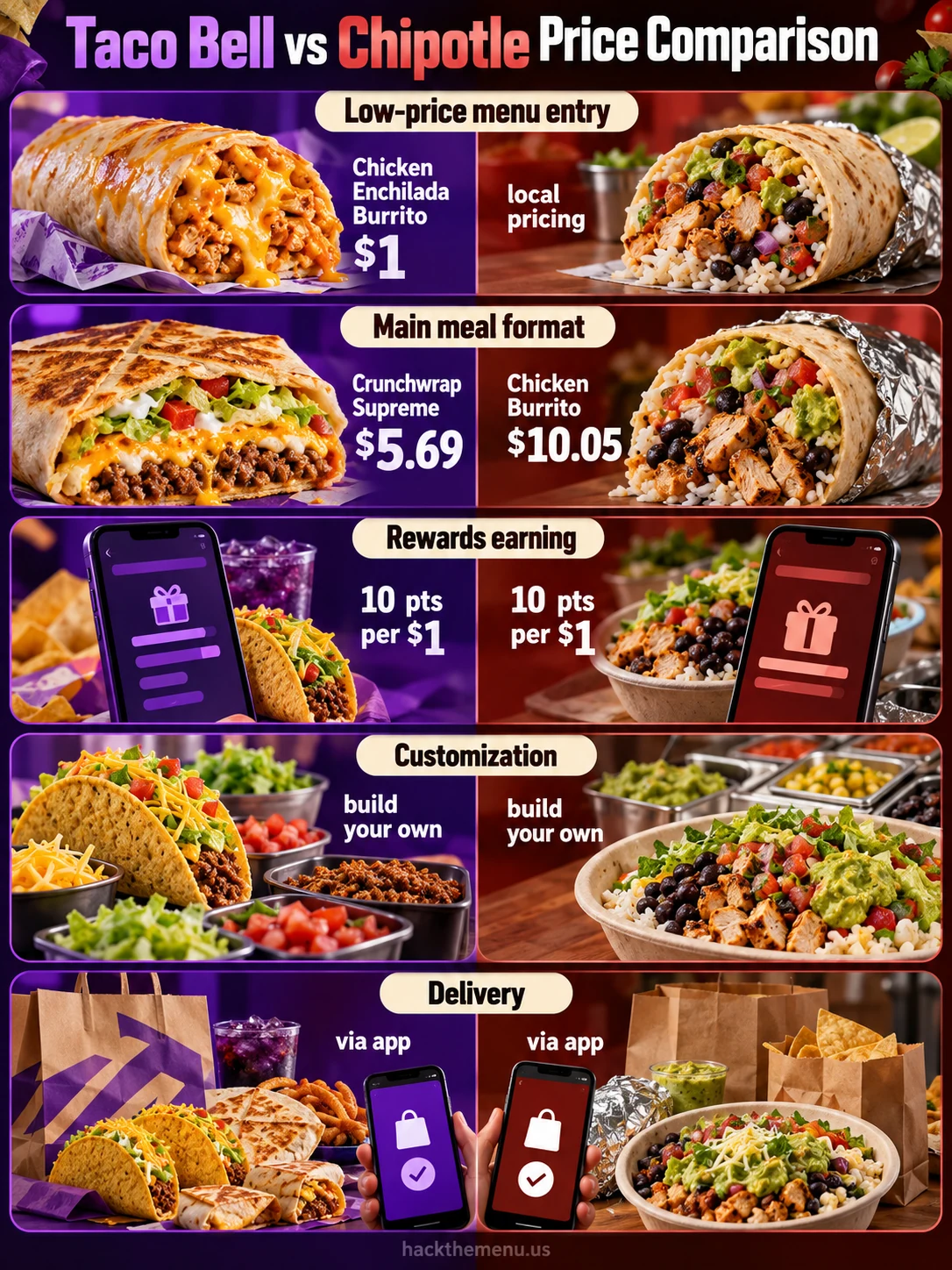
$3 or less
Taco Bell says its Luxe Value Menu has 10 favorites priced at $3 or less.
10 pts / $1
Taco Bell Rewards starts at 10 points per eligible dollar.
10 pts / $1
Chipotle Rewards also earns 10 points per eligible dollar.
Local prices
Use the selected restaurant and ordering channel for the final checkout comparison.
Price note: Taco Bell and Chipotle prices vary by restaurant, market, customization, and ordering channel. Delivery can use higher menu pricing or additional fees. Use this comparison as a value framework, then check the selected restaurant before ordering.
The Short Answer
Taco Bell is the cheaper starting point for a budget-focused order. Its official menu promotes a Luxe Value Menu with 10 items priced at $3 or less, which gives customers a clear low-cost entry. Chipotle focuses on larger customizable burritos, bowls, tacos, salads, and quesadillas, so its value is better judged by the complete entrée rather than the cheapest item.
For item-by-item Taco Bell pricing, start with the Taco Bell menu with prices. That page covers tacos, burritos, combos, boxes, drinks, sides, and value items in more detail. This comparison stays focused on the price relationship between Taco Bell and Chipotle.
For Chipotle entrée pricing and protein choices, use the Chipotle menu with prices. Chipotle pricing is especially sensitive to restaurant selection, protein, extras such as guacamole or queso, and ordering channel. Compare the exact bowl or burrito you intend to buy.
If you want more Mexican and Tex-Mex restaurant options, browse the Mexican & Tex-Mex menu category. Taco Bell and Chipotle serve different ordering styles, so the cheapest chain is not automatically the best value for every appetite. A low-priced snack order and a full customized entrée solve different needs.
Taco Bell vs Chipotle Price Comparison
The most useful comparison separates low-cost entry prices from full-meal value. Taco Bell publishes a clear value-menu ceiling for several items, while Chipotle requires a restaurant-level price check for most entrées. Rewards, extras, and delivery can then change the effective value after the base order is chosen.
| Value area | Taco Bell | Chipotle | Best fit |
|---|---|---|---|
| Low-price menu entry | 10 Luxe Value Menu items at $3 or less | No single nationwide entrée price published | Taco Bell |
| Main meal format | Tacos, burritos, combos and boxes across several price tiers | Large customizable burritos, bowls, tacos, salads and quesadillas | Depends on appetite |
| Rewards earning | 10 points per eligible $1 at base tier | 10 points per eligible $1 | Tie on headline earn rate |
| Customization | Many low-cost add-ons and swaps, with charges varying | Protein and premium extras can materially change total | Compare final cart |
| Delivery | Fees, offer eligibility and pricing can differ | Delivery menu prices can be higher and fees may apply | Pickup for cleanest baseline |
Taco Bell wins the clearest sticker-price comparison because shoppers can deliberately build a low-cost order from the value menu. Chipotle becomes more competitive when you compare one substantial customized entrée against several smaller items from another chain. The correct answer depends on whether your goal is the lowest spend or the most satisfying meal for that spend.
Taco Bell’s official menu shows the Luxe Value Menu, combos, tacos, burritos, specialties, drinks, and other categories. Use the selected restaurant before treating any displayed price as universal. Availability and breakfast participation can also vary.
Chipotle’s official ordering menu is the best first-party place to confirm the restaurant-specific entrée total. Protein choice, guacamole, queso, additional portions, and delivery can change the price quickly. Build the same order you intend to purchase before comparing totals.
Promotions can shift the comparison, so the Taco Bell happy hour and deals page is useful when drinks or limited offers matter to your order. Taco Bell also advertises Happier Hour on its menu. Keep promotional savings separate from the regular-price baseline.
Chipotle offers member rewards and occasional promotions through its own channels, so the Chipotle deals and offers page is the better companion when you are comparing special savings. A targeted offer can narrow the price gap for a specific customer. Regular menu pricing should still be the starting point.
Which Is Cheaper for a Small Budget?
Taco Bell has the stronger answer when your goal is to spend only a few dollars. The Luxe Value Menu gives you multiple items at a published ceiling of $3 or less, so you can mix a taco-style item, burrito, snack, or side without immediately moving into a full entrée price. That makes budget control straightforward.
Chipotle is not organized around a low-dollar snack menu in the same way. Its core value proposition is a customizable entrée with rice, beans, protein, toppings, and optional extras. If you only need a small bite, Taco Bell’s structure is more naturally aligned with that goal.
For a broader benchmark, see the cheapest Mexican fast food chains. That comparison helps separate the Taco Bell versus Chipotle question from the wider market. Local restaurant prices can still rearrange the order.
Which Gives Better Value for a Full Meal?
A full-meal comparison is closer than a low-price comparison. Chipotle entrées are designed to combine a substantial base, protein, beans, toppings, salsa, and other included choices into one bowl or burrito. Taco Bell can reach a similar level of fullness through a combo, Luxe Box, or several individual items.
This is where quantity and preference matter more than the cheapest menu item. A Chipotle bowl may cost more at checkout, but one entrée may be enough for a customer who would otherwise buy several Taco Bell items. Taco Bell still gives you more ways to keep the absolute total low.
The Fast Food Value Menus Compared article is useful if your main question is how different chains package lower-cost meals. Taco Bell’s value menu is a classic low-ticket structure, while Chipotle relies less on a separate value tier. Compare the complete basket rather than one item name.
If you want another direct Mexican-chain matchup, Taco Bell vs Del Taco focuses on two brands with more similar fast-food price structures. That comparison can help you judge whether Taco Bell’s low-cost advantage is specific to Chipotle or extends to closer competitors. Meal composition remains important.
Customization Can Change the Total
Both chains are highly customizable, but the cost impact works differently. Taco Bell lets customers add or remove ingredients across tacos, burritos, specialties, and boxes, with extra charges depending on the ingredient and restaurant. Small add-ons can turn a value-menu item into a more expensive build.
Chipotle customization is central to the entrée itself, but premium extras such as guacamole, queso blanco, or additional protein can raise the total noticeably. The base bowl or burrito may include many toppings without an extra charge, while premium additions change the value calculation. Compare standard builds first.
The Taco Bell secret menu covers unofficial combinations and customization ideas that can alter the price. Treat each modification as part of the final basket rather than assuming a hack saves money. The cheapest standard build is the cleaner benchmark.
The Chipotle secret menu serves the same role for bowls, burritos, quesadillas, sides, and custom combinations. Some ideas use additional ingredients or portions that may cost extra. Ask the selected restaurant or check the app total before ordering.
Taco Bell Rewards vs Chipotle Rewards
Both programs advertise a base earning rate of 10 points per eligible dollar, so the headline number starts as a tie. Taco Bell gives a reward every 250 points at its base tier and offers a higher Fire Tier after reaching the program threshold. Chipotle uses a Rewards Exchange where points can be redeemed for food and other options.
The earning rate does not make the programs equally valuable for every customer. Taco Bell’s lower-priced items can mean slower point accumulation per visit but easier low-cost purchases, while Chipotle customers may earn more points from a larger single check. Redemption choices and offers decide the practical return.
For another Chipotle comparison, Chipotle vs Qdoba looks at two build-your-own burrito and bowl chains with more similar ordering structures. That is useful if rewards and entrée customization matter more than low-dollar snack pricing. Compare the benefits you will actually redeem.
Is Taco Bell or Chipotle Cheaper for Delivery?
Pickup is the cleaner baseline if your goal is a fair food-price comparison. Delivery can add fees, higher menu prices, minimums, or different offer eligibility, so the chain that looks cheaper in-store may not remain cheaper at checkout. Third-party marketplaces can add another layer of variation.
Chipotle explicitly notes on its ordering pages that delivery pricing can be higher and fees may apply. Taco Bell also uses delivery-specific ordering conditions and rewards rules, with some offers limited by channel. Compare the same pickup basket before comparing delivery convenience.
The Restaurant App Prices vs In-Store Prices article explains why digital prices can diverge from the counter price. It is especially useful when a small food-price difference disappears after fees. Use final checkout totals for delivery decisions.
Which Should You Choose for the Best Value?
Choose Taco Bell when the lowest possible spend, a value-menu order, snack flexibility, or several inexpensive items matter most. Choose Chipotle when you want one larger customizable burrito or bowl and are willing to spend more for that meal format. Neither choice should be judged from delivery pricing alone.
The table below turns those differences into a quick decision framework. It does not replace local pricing, because the exact restaurant and customization determine your total. Use it to decide which chain to price-check first.
| Your priority | Start with | Why |
|---|---|---|
| Lowest possible spend | Taco Bell | Published value-menu items at $3 or less |
| One large customizable entrée | Chipotle | Burritos and bowls bundle many included ingredients |
| Several small items | Taco Bell | More low-ticket tacos, burritos and snacks |
| Rewards earning rate | Tie | Both advertise 10 points per eligible dollar at base earning |
| Customization control | Compare both | Extras can change the final total at either chain |
| Delivery value | Compare checkout | Higher menu prices or fees can erase an in-store advantage |
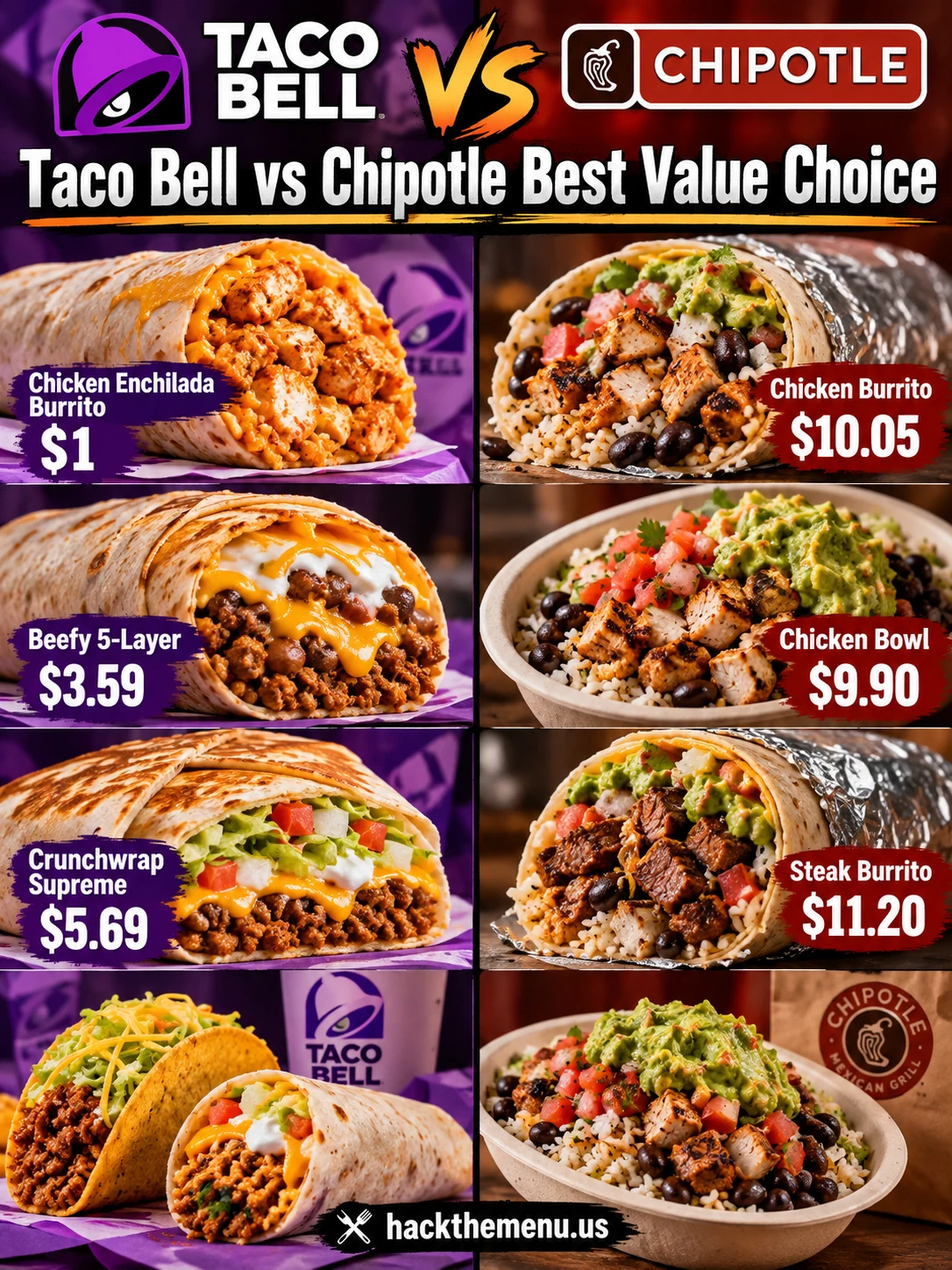
Taco Bell is the clearer answer to the literal question of which chain is cheaper for a budget order. Chipotle can still provide strong value when one filling customized entrée replaces a larger multi-item order elsewhere. Compare appetite, not just the lowest item price.
If you are working with a fixed budget, Best Fast Food Meals Under $10 gives you more options across major chains. The best value often comes from matching meal size to your actual appetite. Spending less is only useful when the order still does the job.
Frequently Asked Questions
Is Taco Bell cheaper than Chipotle?
Taco Bell has the clearer low-price advantage for budget-focused orders because its official Luxe Value Menu includes 10 items priced at $3 or less. Chipotle focuses on larger customizable entrées and uses restaurant-specific pricing. Compare the final local basket for a full-meal decision.
Does Taco Bell have a value menu?
Yes. Taco Bell’s official menu promotes a Luxe Value Menu with 10 favorites at $3 or less. Item availability and restaurant pricing can vary, so confirm the selected location before ordering.
Why doesn’t Chipotle have one national menu price?
Chipotle prices vary by restaurant and order configuration. Protein choice, premium extras, local market pricing, and delivery can change the total. Select the restaurant and build the exact entrée you want for the useful price.
Which rewards program earns points faster?
Both programs advertise 10 points per eligible dollar at their base earning rate. Taco Bell and Chipotle use different redemption structures, so equal earning rates do not mean equal reward value. Compare the foods and offers you are likely to redeem.
Is Chipotle better value if I want a large meal?
It can be. A Chipotle bowl or burrito combines many ingredients into one customizable entrée, which may be enough for someone who would otherwise buy several smaller items. Taco Bell still gives you more ways to keep the total spend low.
Which chain has more customization?
Both are highly customizable, but the systems differ. Taco Bell allows changes across many tacos, burritos, boxes, and specialties, while Chipotle builds customization into the bowl or burrito assembly process. Premium extras can increase the price at either chain.
Is pickup cheaper than delivery at Taco Bell and Chipotle?
Pickup is usually the cleaner baseline for food-price comparison because delivery can involve higher menu prices, fees, or different offer rules. Chipotle explicitly notes higher delivery pricing on its ordering pages. Compare final checkout totals before choosing convenience over pickup.
For more restaurant price comparisons and budget-focused ordering topics, browse the Blog. These comparisons connect back to detailed restaurant Menu pages so you can move from a broad value decision to exact items and prices. Use the selected restaurant whenever a few dollars will change your choice.