Nobu Secret Menu: 10 Sushi & Ordering Hacks
NOBU USA • SECRET MENU
Nobu Secret Menu: 10 Sushi & Ordering Hacks
Nobu does not use one nationwide hidden-menu board. Its best secret-menu-style orders come from choices already built into U.S. menus: fish format, hand or cut rolls, sauce styles, salad proteins, vegetable routes, chef selections, and tasting menus.
Menus differ by city and season. Use these hacks as ordering patterns, then confirm the exact fish, sauce, roll, and tasting-menu choices at the Nobu location you plan to visit.
10
ordering hacks
Hand / Cut
maki format choice
Cold → Hot
chef-recommended flow
Omakase
chef-led tasting route
Nobu’s own Las Vegas restaurant publishes a first-visit strategy: start with several cold dishes, move to hot dishes, and finish with sushi and dessert, shared family style. That makes the most useful Nobu hacks less about secret names and more about using the menu’s built-in choices intelligently.
Does Nobu Have a Secret Menu?
Nobu does not advertise a single U.S. secret menu. The restaurant group operates location-specific menus, so a dish or sauce choice in Houston, Atlanta, Chicago, or Las Vegas may not appear in exactly the same form elsewhere. The reliable approach is to use recurring Nobu menu structures instead of asking for a viral item name.
For standard categories and future location-by-location price coverage, use the fixed Nobu menu. Deal-focused intent belongs on the fixed Nobu happy hour page, while this article focuses on normal dinner customization and ordering strategy.
For other Asian restaurant customization ideas, compare the Din Tai Fung secret menu and the P.F. Chang’s secret menu. Nobu is more location-sensitive, so asking what the restaurant actually has that evening matters more.
Nobu Secret Menu: 10 Hacks at a Glance
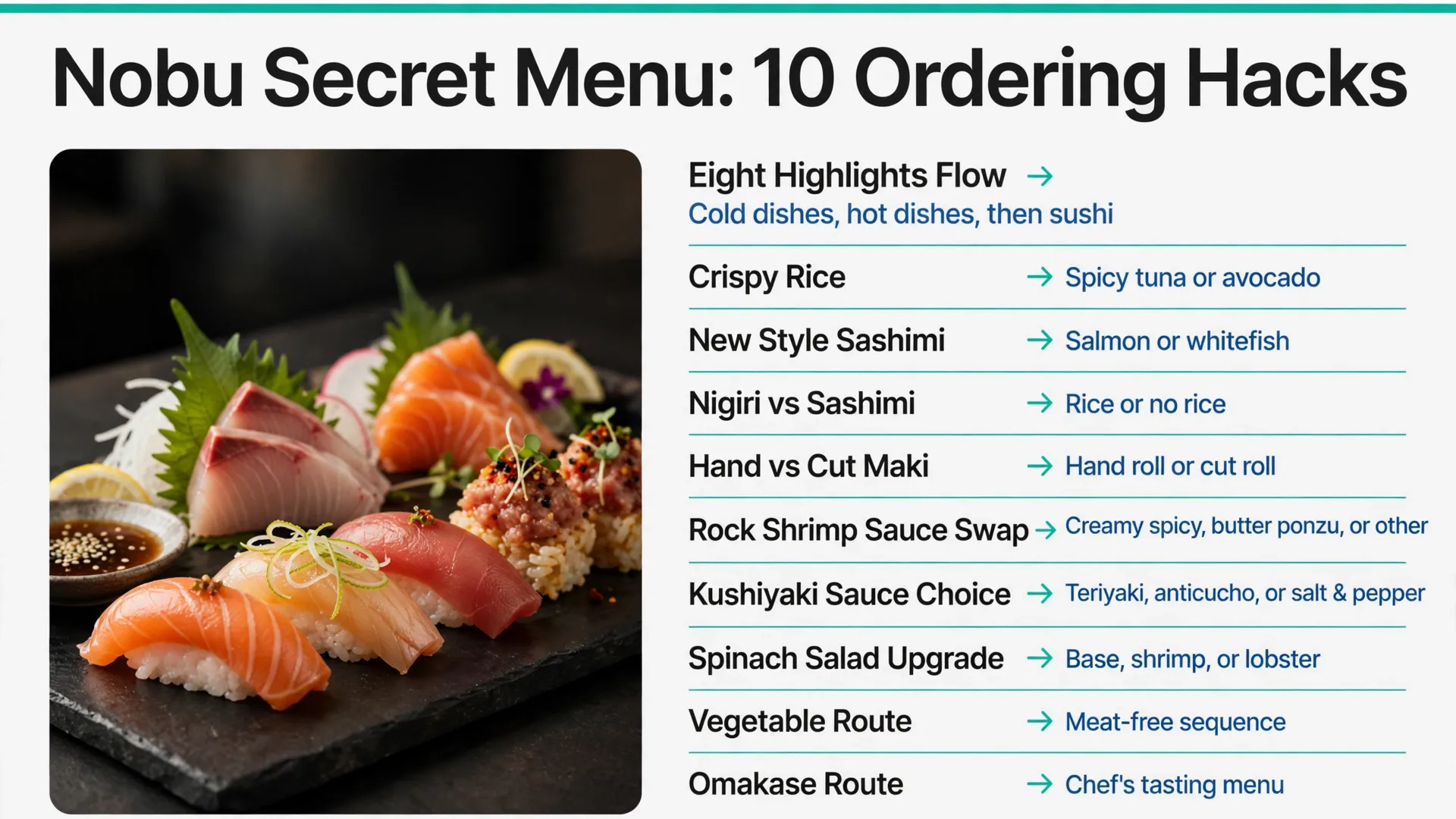
These ten ideas are based on ordering choices that appear across official U.S. Nobu menus. Some are direct format choices, such as hand versus cut rolls; others are ways to use chef selections and menu progressions to get more variety without inventing a dish.
| Hack | Start with | Choice | Why it works |
|---|---|---|---|
| Eight Highlights Flow | Shared dinner | Cold dishes → hot dishes → sushi | Nobu publishes this first-visit sequence |
| Crispy Rice Choice | Crispy Rice | Spicy tuna or avocado where listed | Same format, different direction |
| New Style Fish Choice | New Style Sashimi | Salmon or whitefish where listed | Keeps preparation style, changes fish |
| Nigiri vs Sashimi | Fish by the piece | Rice or no rice | Same seafood, different format |
| Hand vs Cut Maki | Eligible maki | Hand roll or cut roll | Changes sharing and texture |
| Rock Shrimp Sauce Swap | Rock Shrimp Tempura | Creamy spicy, butter ponzu, or other listed sauce | Official sauce choice at select U.S. locations |
| Kushiyaki Sauce Choice | Chicken, beef, or salmon skewers | Teriyaki, anticucho, or salt & pepper | Official seasoning choice |
| Spinach Salad Protein Upgrade | Baby Spinach Salad | Base, shrimp, or lobster where listed | Turns a side into a larger plate |
| Vegetable Route | Vegetable roll / tempura / hot vegetable | Build a meat-free sequence | Multiple vegetable formats appear on U.S. menus |
| Omakase Route | Chef tasting menu | Location-specific chef selection | Lets the kitchen set the progression |
The menu is designed for sharing at many Nobu locations, which makes a progression more practical than ordering several large entrées at once. If your group prefers a broad restaurant menu rather than a sushi-led meal, the Cheesecake Factory secret menu offers a very different customization model.
5 Sushi and Cold-Dish Hacks
1. Follow Nobu’s Cold-to-Hot-to-Sushi Flow
Nobu Las Vegas gives first-time diners a useful sequence from its kitchen: share two or three cold dishes, move to two or three hot dishes, then finish with sushi and dessert. This is a better secret-menu tactic than ordering every famous dish at once because each course gets its own moment.
For a two-person table, scale the idea down instead of treating the suggested counts as mandatory. One cold dish, one hot dish, and a roll or a few sushi pieces can still create the same progression. Larger tables can add more variety without making every diner order a separate entrée.
2. Switch Crispy Rice From Tuna to Avocado
Several U.S. Nobu menus list Crispy Rice with Spicy Tuna, while locations such as Houston and Atlanta also list a Crispy Rice with Avocado version. If both appear at your restaurant, the avocado version keeps the crisp rice format while changing the topping from raw fish to a vegetable-forward option.
This works well when a table wants to compare two versions of the same texture. Order one fish version and one avocado version rather than adding another unrelated cold dish. Availability is location-specific, so use only the versions printed on that restaurant’s menu.
3. Choose the Fish for New Style Sashimi
New Style Sashimi is a recurring Nobu preparation, but the fish can vary. Houston, for example, lists salmon or whitefish. If your location offers more than one fish, keep the preparation the same and change the fish to see how the same style reads with a richer or leaner bite.
This is also easier for the server than requesting an improvised sashimi sauce. Name the listed New Style preparation first, then ask which fish choices are available. For another dumpling-and-noodle restaurant where format choices matter, see the Din Tai Fung secret menu.
4. Order the Same Fish as Nigiri or Sashimi
Nobu U.S. menus commonly list many fish by the piece under Nigiri & Sashimi. Choosing nigiri adds seasoned rice, while sashimi keeps the fish on its own. If you are comparing tuna, salmon, yellowtail, scallop, or another fish offered both ways, the format can change the balance more than another sauce would.
A useful tasting approach is to order one style for a richer or firmer fish and another for the next selection rather than duplicating everything. Piece minimums and pricing differ by location, so check the menu before building a large comparison.
5. Switch an Eligible Maki Between Hand and Cut
Houston and other Nobu menus publish separate Hand and Cut prices for many maki, including tuna, spicy tuna, salmon-avocado, yellowtail-scallion, vegetable, and cucumber-avocado. A hand roll is designed as an individual cone-like serving, while a cut roll is easier to share across the table.
Use hand rolls when each person wants a dedicated roll and cut rolls when the group is tasting several dishes. The ingredients may be similar, but the eating format and sharing pattern are different. This is one of the simplest menu-native Nobu hacks.
5 Hot-Dish and Chef-Choice Hacks
6. Pick the Rock Shrimp Sauce
Rock Shrimp Tempura appears across Nobu menus, but some U.S. locations print multiple sauce choices. Atlanta has listed creamy spicy, butter ponzu, and creamy jalapeño, while Las Vegas menus commonly list creamy spicy or butter ponzu. Choose the sauce from the restaurant’s printed options instead of treating Rock Shrimp as one fixed flavor.
Creamy spicy gives the dish a richer, hotter coating, while butter ponzu moves toward citrus and savory notes. If a location has a third sauce, ask the server how it differs before ordering. This makes a repeat visit feel different without changing the main ingredient.
7. Choose the Kushiyaki or Yakimono Seasoning
Nobu Atlanta lists kushiyaki and yakimono proteins with seasoning choices such as teriyaki, anticucho, or salt and pepper. That means chicken, beef, salmon, or another listed protein can move in a sweeter Japanese direction, a spicier Peruvian-influenced direction, or a simpler grilled direction.
Choose the protein first, then the listed seasoning. If the table already has several sweet or creamy dishes, salt and pepper or anticucho can add contrast. If the rest of the meal is raw and citrus-forward, teriyaki can give the hot course more weight.
8. Turn the Baby Spinach Salad Into a Larger Plate
Some U.S. menus list Baby Spinach Salad with Dry Miso in a base version plus seafood upgrades. Houston has listed grilled shrimp and half-lobster versions. When those choices are available, adding protein can turn a lighter salad into a more substantial shared course without adding a separate full seafood entrée.
This is useful for a table that wants greens but still wants one warm or cooked protein element. Check the exact upgrade and price before ordering because seafood additions can change the total sharply.
9. Build a Vegetable-Forward Nobu Sequence
Nobu menus include vegetable hand or cut rolls, cucumber-avocado rolls, Shojin vegetable tempura, roasted cauliflower, eggplant, mushrooms, salads, and other vegetable dishes depending on the city. Rather than asking for a meat dish with several removals, build the meal from the vegetable items the restaurant already lists.
A simple sequence might use a vegetable roll, one salad or cold vegetable dish, and one hot vegetable plate. This keeps the order closer to the kitchen’s intended preparations. For broader full-service customization ideas, the P.F. Chang’s secret menu provides another comparison.
10. Let Omakase Replace the DIY Order
Many Nobu locations offer a chef-led omakase or tasting menu. This is the opposite of building a long custom list: you choose the tasting route, and the kitchen determines the progression within that location’s format. Some locations also publish more than one tasting level or a vegetarian tasting option.
Omakase works best when the table is comfortable giving the chef more control. Tell the restaurant about allergies, dietary restrictions, and strong dislikes before the meal begins. For a steakhouse comparison where the experience is centered on protein choices instead of sushi, see the Ruth’s Chris Steak House secret menu.
How to Order Nobu Secret-Menu Hacks
Nobu ordering is easiest when you describe the format you want instead of using a hidden nickname. Start with the location’s own menu, decide whether the meal is sushi-led, chef-led, vegetable-forward, or a shared progression, then use the choices that menu actually prints.
- Choose the Nobu location first because menus, fish, sauces, tasting menus, and prices vary by city.
- Tell the server whether you want a shared progression, sushi-focused meal, vegetable-forward order, or tasting menu.
- For sushi, choose the fish first and then decide nigiri, sashimi, hand roll, or cut roll where available.
- For hot dishes, ask about the sauce choices printed on that location’s menu rather than requesting an unlisted sauce.
- If dietary restrictions or allergies matter, tell the restaurant before the order is finalized.
- Ask for the final price when seasonal seafood, Wagyu, caviar, truffles, or market-price items are involved.
Nobu’s official Las Vegas restaurant page is especially useful because its kitchen publishes a first-visit ordering sequence. That same principle works at other locations even though the exact dishes vary.
Prices and Availability
Nobu does not use one nationwide U.S. price list. Menu prices, fish availability, Wagyu pricing, tasting menus, bar menus, and seasonal dishes differ by city. A sushi piece, hand roll, tasting menu, or premium seafood course should therefore be priced from the location you actually plan to visit.
Use the fixed Nobu menu as this site’s core menu reference as coverage expands, then confirm the selected restaurant’s official menu before booking or ordering. Premium items such as caviar, Japanese A5 Wagyu, lobster, uni, toro, and truffles can move the check much higher than a vegetable roll or basic sushi piece.
For other restaurant-specific custom-order pages, browse the Secret Menus category. The exact Nobu choice should always follow the location’s menu rather than a menu from another city.
Nutrition, Raw Seafood, and Allergy Notes
Nobu menus include raw and undercooked seafood, meat, shellfish, and eggs, and U.S. location menus carry the standard food-safety warning for those items. Nigiri, sashimi, tartare, oysters, toro, and some Wagyu preparations can fall into that category.
Dietary restrictions also need location-specific handling because sauces, miso preparations, tempura, soy-based seasonings, sesame, shellfish, dairy, and gluten-containing ingredients can appear across the menu. Nobu Chicago states that dietary restrictions and allergies can be accommodated with advance notice for events, which reinforces the value of telling the restaurant before the order is set.
Review the selected location’s official Nobu menu and speak with staff when an allergy or medical restriction matters. Removing one visible ingredient does not by itself establish that cross-contact or hidden ingredients are absent.
Frequently Asked Questions
Does Nobu have a real secret menu?
Nobu does not publish one nationwide hidden-menu list. The useful secret-menu-style choices come from location-specific options such as fish format, hand or cut rolls, sauces, chef selections, vegetable dishes, and tasting menus.
What is the best way to order Nobu for a first visit?
Nobu Las Vegas recommends beginning with cold dishes, moving to hot dishes, and finishing with sushi and dessert, shared family style. Scale the number of dishes to the size of your table.
Can I choose between nigiri and sashimi at Nobu?
Many Nobu locations list seafood under Nigiri & Sashimi by the piece. Availability, piece minimums, and pricing depend on the restaurant.
Can I order a Nobu roll as a hand roll or cut roll?
Many maki are listed in both Hand and Cut formats at U.S. locations such as Houston. Some specialty rolls are cut-roll-only.
Can I choose the fish for New Style Sashimi?
Some locations list more than one fish for New Style Sashimi. Houston, for example, has listed salmon or whitefish.
Can I change the sauce on Rock Shrimp Tempura?
At some Nobu locations, yes. U.S. menus have listed choices such as creamy spicy, butter ponzu, and creamy jalapeño, depending on the restaurant.
Does Nobu have vegetarian options?
Yes. U.S. menus can include vegetable rolls, cucumber-avocado rolls, Shojin vegetable tempura, salads, roasted vegetables, mushrooms, and other vegetable dishes. Selection varies by city.
What is Nobu omakase?
Omakase is a chef-led tasting route in which the kitchen sets a multi-course progression. The price, format, timing, and availability vary by location.
Can Nobu accommodate allergies?
Some Nobu locations state that dietary restrictions and allergies can be accommodated with notice. Contact the restaurant directly because ingredients and preparation environments vary.
Are Nobu menus the same in every U.S. city?
No. Core Nobu dishes recur, but prices, fish, sauces, tasting menus, seasonal items, and local specialties differ by restaurant.
Official Information
HackTheMenu.us is an independent restaurant-information website and is not affiliated with, endorsed by, or operated by Nobu. Menu items, prices, tasting menus, service formats, and availability can differ by restaurant and season.
For direct restaurant information, use Nobu’s location pages and the official menus linked above. Reservations, allergy accommodations, dress expectations, service hours, and tasting-menu participation should be confirmed with the specific restaurant.
Bottom Line
The Nobu secret menu is best treated as an ordering playbook. The strongest moves are choosing the right fish format, switching eligible maki between hand and cut, selecting a listed sauce, using protein upgrades where offered, building a vegetable sequence, or handing the progression to the chef through omakase.
Start with the location, not the rumor. Use the menu that restaurant is serving, make one or two supported choices at a time, and let the kitchen’s own recurring formats create the variety.