STEAKHOUSE VALUE COMPARISON
Texas Roadhouse vs LongHorn Steakhouse: Prices Compared
Texas Roadhouse and LongHorn Steakhouse both center their menus on steaks, but the final value depends on cut, portion size, included sides, add-ons, and local restaurant pricing. Compare equivalent steak dinners and the same ordering method before deciding which restaurant costs less.
2 sides
Most Texas Roadhouse hand-cut steak entrées include a choice of two sides.
20 oz
Texas Roadhouse lists a bone-in ribeye at this steak size.
23 oz
Texas Roadhouse lists a porterhouse T-bone at this size.
Local menus
LongHorn asks diners to select a restaurant to see local menu pricing.
Price note: Steakhouse prices vary by restaurant, cut, portion, substitutions, add-ons, and ordering channel. Match the same kind of steak dinner and the same fulfillment method before comparing totals.
Which Steakhouse Usually Gives Better Value?
Neither chain is automatically cheaper for every order because a sirloin dinner, filet, ribeye, and porterhouse represent very different price and portion tiers. The Texas Roadhouse menu emphasizes hand-cut steaks with sides already built into many entrées, which makes completed-dinner value easy to evaluate. That structure can be attractive when you want a steak plus two side dishes without building the plate piece by piece.
LongHorn uses a similar steakhouse framework but has its own signature cuts, combinations, starters, chicken, seafood, and side choices. The LongHorn Steakhouse menu is best compared at the restaurant level because the chain directs guests to choose a nearby location for menu pricing. A lower base steak price does not necessarily mean a lower finished dinner if side choices or upgrades differ.
For a simple value test, match the cut first, then the ounce size, then the sides and any starter or drink. This keeps a value sirloin from being compared against a premium filet or bone-in ribeye. Browse the Steakhouses & BBQ menu category when you want more restaurant menus built around steaks, ribs, and grilled entrées.
Texas Roadhouse vs LongHorn Price Structure
The fairest comparison uses meal structure rather than one isolated menu price. Texas Roadhouse pairs many steaks with two sides and offers ribs, combination plates, chicken, country dinners, burgers, and salads. LongHorn also builds full steakhouse dinners around steaks, sides, starters, seafood, chicken, salads, and combinations, but local menu pricing should be checked at the selected restaurant.
Use the table as a basket-building framework rather than a nationwide price list. The goal is to compare what reaches the table, not simply which restaurant shows the lower first number. Portion size becomes especially important on ribeyes, filets, strips, and porterhouse cuts.
| Comparison point | Texas Roadhouse | LongHorn Steakhouse | Best way to compare |
|---|---|---|---|
| Entry steak | Hand-Cut Sirloin and other value-oriented cuts | Sirloin and other steakhouse cuts by location | Match cut and ounce size |
| Premium steak | Dallas Filet, ribeye, bone-in ribeye, porterhouse | Flo’s Filet, Outlaw Ribeye, porterhouse, New York Strip | Compare equivalent premium cuts |
| Included sides | Many steak entrées include two sides | Steak dinners use restaurant-specific side formats | Count included sides before judging price |
| Combination dinner | Steak with ribs or chicken combinations | Steak and grill combinations on participating menus | Compare total proteins and sides |
| Local pricing | Ordering depends on selected restaurant | Menu prices vary by selected restaurant | Use nearby restaurants and the same order channel |
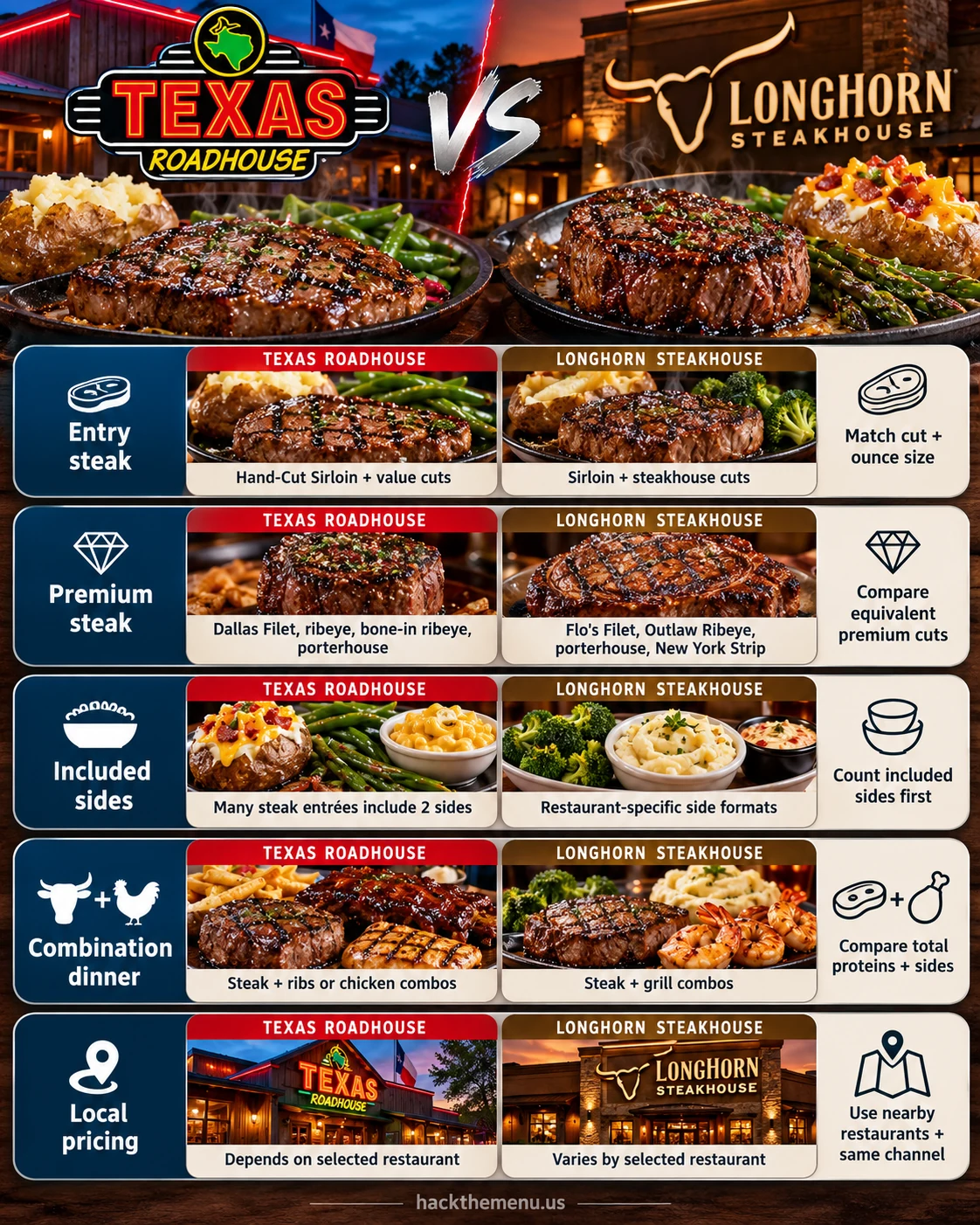
A steakhouse value comparison becomes misleading when the cuts are not equivalent. A smaller sirloin can be a strong budget meal but should not be used to prove one chain is cheaper than another chain’s larger ribeye. The portion sizes vs prices comparison explains why serving size and included components matter alongside the menu price.
Which Chain Gives Better Steak Value?
Texas Roadhouse gives diners several clear steak tiers. Its official menu includes Hand-Cut Sirloin, New York Strip, Dallas Filet, Ft. Worth Ribeye, Bone-In Ribeye, Prime Rib, Filet Medallions, and a Porterhouse T-Bone. The 20-ounce bone-in ribeye and 23-ounce porterhouse illustrate why ounce size should be part of any serious price comparison.
LongHorn’s steak identity is built around signature cuts such as Outlaw Ribeye, Flo’s Filet, Porterhouse, and New York Strip. A diner deciding between the two chains should compare the same general cut and similar size before adding appetizers, drinks, or desserts. The same reasoning appears in the combo meal vs à la carte comparison, where included components can change apparent value.
Customization can also change the effective price of a steak dinner. Toppings, extra proteins, premium sides, or substitutions can move a lower-priced order into a higher tier very quickly. For modification ideas, the Texas Roadhouse secret menu focuses on order-by-modification options rather than treating unofficial combinations as guaranteed named items.
Menu Range Beyond Steaks
Texas Roadhouse is not limited to steak. Its official menu also lists starters, ribs, steak-and-protein combinations, salmon, catfish, chicken specialties, country dinners, salads, burgers, sandwiches, kids meals, sides, desserts, and drinks. That breadth matters when a group contains people who do not all want the same kind of entrée.
LongHorn likewise gives diners alternatives to steak, including starters, chicken, seafood, salads, burgers or sandwiches in applicable locations, side dishes, desserts, and grill combinations. The LongHorn Steakhouse secret menu can help with customization ideas when a standard menu item is close to what you want but needs modifications. Paid extras should still be counted in the final basket.
For families and mixed groups, the cheapest steak is not always the most useful benchmark. Build enough food for every diner and compare the total number of entrées, sides, drinks, and shared starters. The restaurant meals for a family of four article provides a broader framework for group-value comparisons.
Sides, Portions, and Completed Meal Value
Steakhouse value often comes from what is included around the steak. Texas Roadhouse lists many hand-cut steak entrées with a choice of two sides, while its steak kabob and some specialty plates use different side structures. LongHorn also uses restaurant-specific side and entrée formats, so the finished plate should be matched before comparing the bill.
The second table focuses on how different order types affect value. It does not assume one chain has a universal nationwide dollar advantage. Instead, it shows which meal details should be held constant before you compare local restaurant prices.
| Order type | What to match | Why it matters |
|---|---|---|
| Sirloin dinner | Cut, ounces, side count, toppings | A smaller sirloin should not be compared with a larger premium cut |
| Ribeye dinner | Boneless vs bone-in, ounces, sides | Bone and portion size can change both price and edible yield |
| Filet dinner | Ounce size, included sides, sauces | Filet pricing is sensitive to portion and add-ons |
| Steak combo | Steak size, second protein, side count | Ribs, chicken, or seafood add meaningful food to the basket |
| Family/group order | Number of diners, starters, entrées, sides, drinks | Total group value matters more than one entrée price |
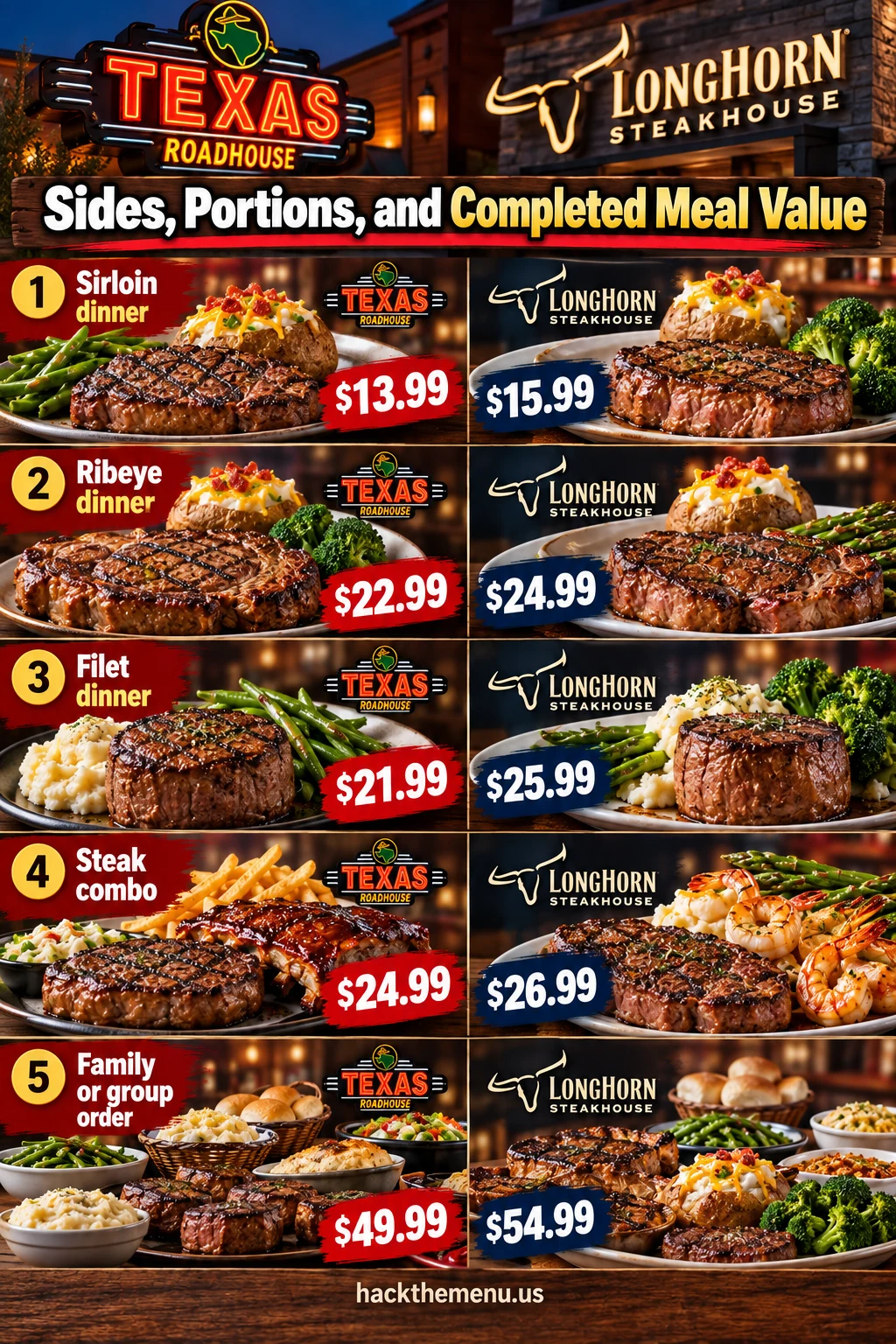
Ordering method can still move the total after the food itself has been matched. Restaurant apps and web ordering can show location-specific prices, so the restaurant app vs in-store price comparison is useful when an online total differs from what you expected. Delivery adds another layer of fees and service costs that should not be confused with the steak price itself.
For the cleanest comparison, use pickup at both restaurants or dine in at both restaurants. If delivery is the goal, compare both through the same type of channel and include every fee. The pickup vs delivery comparison explains why fulfillment method can change which restaurant appears cheaper.
Deals and Timing Can Change the Total
Specials and restaurant-level offers can change the effective cost of an order, but they should be treated as discounts after the normal basket is built. A deal only improves value when it applies to food you already wanted and does not push you into extra purchases. Participation can vary by restaurant.
Deal-focused diners can compare the Texas Roadhouse happy hour page for restaurant-specific savings and ordering notes. The LongHorn Steakhouse happy hour page provides the same kind of deal-focused context for LongHorn. Use the selected location before assuming any offer applies.
Local pricing is the reason two otherwise similar steak dinners can produce different totals in different markets. Restaurant costs, franchise or operating decisions, taxes, and menu configuration can all affect checkout. The article on how restaurant menu pricing works explains why national comparisons should use local baskets rather than one universal price list.
Texas Roadhouse or LongHorn: Which Should You Choose?
Choose Texas Roadhouse when you value a broad set of hand-cut steak options, clear side inclusion on many steak entrées, ribs and combination plates, and a casual steakhouse menu with strong group flexibility. The chain’s menu makes it easy to see the difference between value sirloin, filet, ribeye, prime rib, and oversized cuts. That can make portion-based comparison straightforward.
Choose LongHorn when its signature cuts, restaurant-specific local menu, and steak-focused identity line up better with the cut you want. Flo’s Filet and Outlaw Ribeye create recognizable premium reference points, while local menu selection is important for the actual price. A broader casual-dining comparison such as Applebee’s vs Chili’s is useful when steak is only one part of your restaurant decision.
The best choice comes from matching cut, ounce size, sides, extras, number of diners, and ordering method. Once those details match, compare the two local totals and choose the meal that better fits your appetite and budget. Visit the Blog for more restaurant price and value comparisons.
For first-party menu details, use the official Texas Roadhouse menu and the official LongHorn Steakhouse menu. Prices and availability vary by restaurant.
Frequently Asked Questions
Is Texas Roadhouse cheaper than LongHorn Steakhouse?
Not for every order. The cheaper restaurant depends on the steak cut, ounce size, included sides, add-ons, location, and ordering method. Compare equivalent local steak dinners before choosing.
Which restaurant gives more sides with a steak?
Texas Roadhouse explicitly lists many hand-cut steak entrées with a choice of two sides. LongHorn side structure should be confirmed from the selected restaurant menu. Compare the complete plate rather than only the steak price.
Which has bigger steak options?
Both chains serve large premium steaks, but the exact lineup varies. Texas Roadhouse lists a 20-ounce bone-in ribeye and a 23-ounce porterhouse T-bone on its official menu. Compare ounce size and cut before using price as the deciding factor.
Which is better for a filet?
Both chains offer filet options. Texas Roadhouse lists Dallas Filet and Filet Medallions, while LongHorn highlights Flo’s Filet as a signature cut. The better value depends on portion size, sides, and local price.
Which is better for a group?
Both can work well for groups because each menu includes steak and non-steak choices. Texas Roadhouse has ribs, combinations, chicken, country dinners, burgers, and salads, while LongHorn also provides a broad steakhouse menu. Build the same group basket before comparing totals.
Do Texas Roadhouse and LongHorn prices vary by location?
Yes. Restaurant selection matters for exact menu pricing, especially for online ordering. Use nearby locations and the same fulfillment method for a fair comparison.
Which is better for pickup or delivery?
Pickup gives the cleaner food-price comparison because delivery can add fees, tips, and channel-specific pricing. If you want delivery, compare equivalent baskets through the same type of ordering channel.